Do binders damage cards?
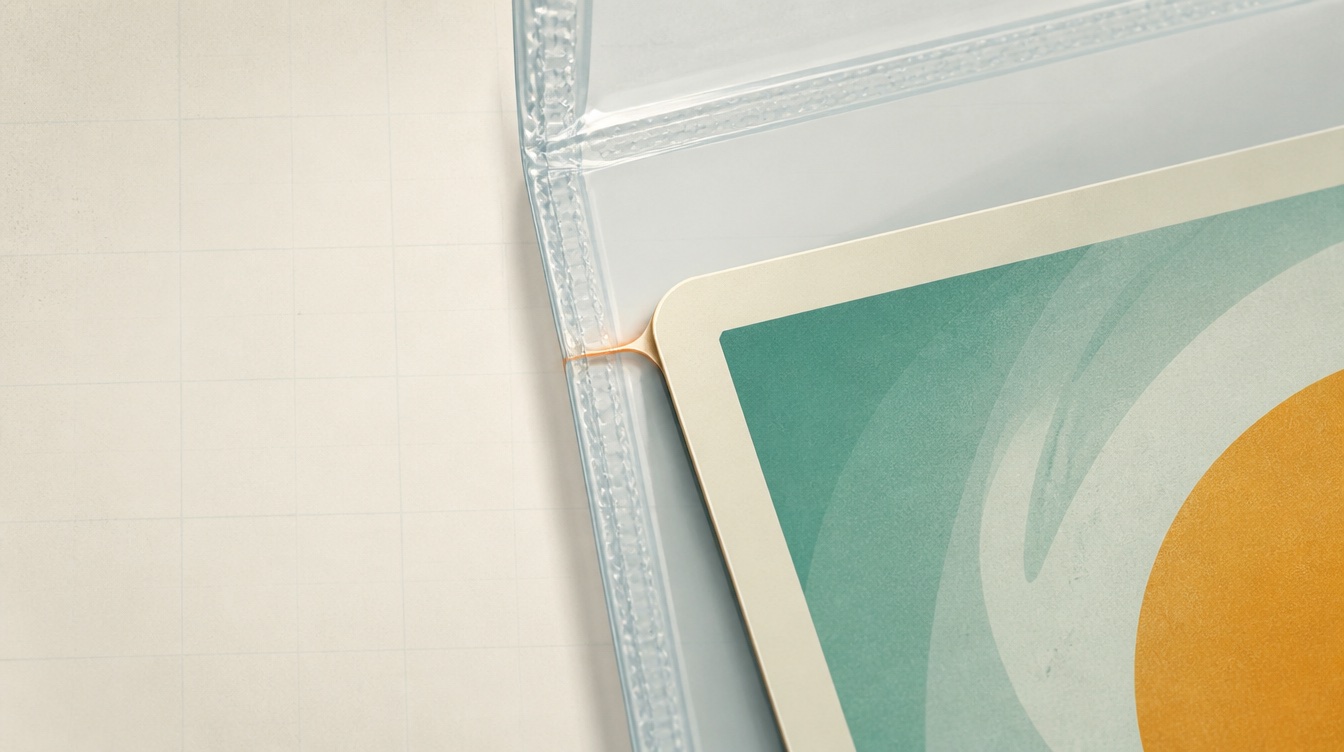
A binder itself doesn't damage cards. What damages cards is a handful of specific mistakes people make around binders: cheap PVC page material, cramming a pocket past its actual capacity, and storing a full binder flat on its spine for months at a time. Fix those three things and a binder is one of the safer long-term homes for a collection, arguably safer than loose bulk storage, since the page keeps every card flat and separated from its neighbors.
The dent problem: it's pressure, not the pocket
The most common complaint is a faint dent or crease along a card's edge after months in a binder. That's almost never the pocket seam itself doing the damage. It's pressure from a page that's overstuffed, holding two or three cards in a slot built for one, or a binder packed so tight that the spine bows and pushes every page against its neighbor. A pocket sized correctly for a single sleeved card, with no extra sleeves or doubled-up cards jammed into the same slot, doesn't put meaningful pressure on the card inside it.
Stacking weight and storage position
How you shelve the binder matters more than most people expect. A binder stored standing upright, spine up like a book, distributes weight evenly across the whole spine. Lay several full binders flat in a stack and the bottom one is now supporting the weight of everything above it, pressed down across every page for as long as it sits there. That's slow, cumulative pressure, and it's the kind of thing that shows up as a warp or a soft crease months later rather than any immediate damage. Store binders vertically, the way you'd shelve books, and this stops being a factor at all.
Page quality: PVC is the real villain
Page material is the one place a binder can hurt a card chemically, on top of the physical pressure covered above. Older or cheap binder pages made with PVC plastic can react with the ink and card stock over years of contact, leaving a card yellowed or tacky along the edges that touched the page. Acid-free, PVC-free pages, standard on most current-generation binders from the major brands, don't carry that risk. If you've got an old binder from years back and you're not sure what it's made of, that's worth checking before you trust it with anything valuable.
| Cause | Actual risk to the card | Fix |
|---|---|---|
| Overstuffed pocket (2+ cards per slot) | High, direct pressure and edge wear | One card, or one sleeved card, per pocket |
| Storing binders flat in a stack | Moderate, slow cumulative pressure | Shelve upright, spine up |
| Old PVC page material | Real, chemical reaction over years | Use acid-free, PVC-free pages |
| A properly loaded standard pocket | Low | No fix needed |
What about zip binders and the pressure question
A zipped edge doesn't add pressure on its own, it just keeps the binder closed and dust out. Where zip binders can go wrong is the same overstuffing problem: if you're forcing a zip shut on a binder that's slightly too full, you're adding compression across every page to make the closure meet, which is the same mechanism as the dent problem above, just applied to the whole binder rather than one pocket.
Toploaders don't belong in a card-page binder
If you're wondering whether cards protected in toploaders are safe in a regular binder page, the honest answer is that they don't fit there in the first place; the pocket isn't sized for a rigid toploader's shell, and forcing one in stresses the seam before it ever gets to the card. See do toploaders fit in binders for which binders are actually built to hold a toploadered card.
Quick answers
Does a binder page leave dents in cards? Only when a pocket is overstuffed or a full binder is compressed shut. A properly loaded standard pocket applies essentially no pressure to a single card.
Is it bad to store binders flat? Stacking several full binders flat for a long stretch adds slow, cumulative pressure to the bottom ones. Shelve them upright instead.
Are old binder pages actually harmful? Older PVC pages can react with card stock over years and leave a residue or discoloration. Current acid-free, PVC-free pages from major brands don't carry that risk.
Should I sleeve cards before putting them in a binder? For anything you'd mind seeing scuffed, yes. A pocket holds a card in place but doesn't stop surface wear from repeated handling the way a sleeve does.
None of this means avoid binders. It means load them the way they're designed to be loaded, one card or one sleeved card per pocket, shelved upright, on pages that aren't decades-old PVC. Do that and the binder is doing its job, not undoing it.